How a Shockproof Cover Changes the Way You Use Your Phone
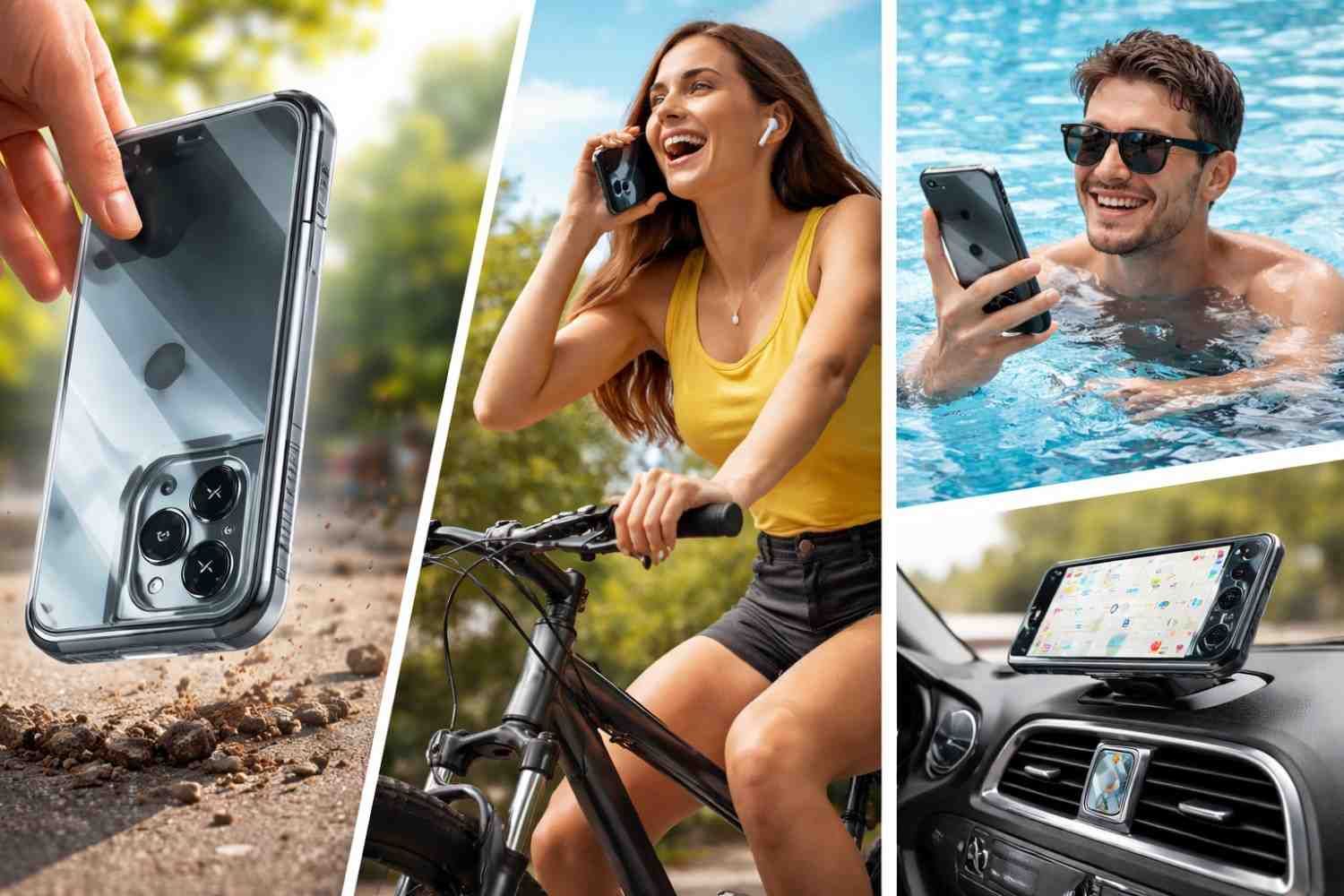
I dropped my phone face-down on concrete last Tuesday. My stomach lurched in that familiar way, expecting the worst. When I picked it up, not even a scratch marked the screen. That moment crystallized something I'd been noticing for months: I don't baby my phone anymore.A shockproof cover doesn't just protect your device from physical damage. It fundamentally alters your relationship with a piece of technology that costs as much as a used car. Once you stop treating your phone like it's made of spun sugar, you start using it differently, taking it places you wouldn't have before, and rediscovering freedoms you didn't realize you'd given up.
The Psychology of Phone Anxiety
Most smartphone users develop what I call "protective paranoia." You know the symptoms:
- Constant pocket checks – That reflexive tap every few minutes to confirm it's still there
- Strategic table placement – Always screen-up, always away from liquids, never near the edge
- Photo handoff anxiety – That internal panic when someone else holds your device
- The two-hand rule – Using both hands for simple tasks that shouldn't require it
This hypervigilance creates a mental tax you pay throughout the day. When you slip a genuine shockproof case onto your device, something shifts in your brain. The first few times you accidentally knock it off a counter, your heart still races. But when you pick it up unharmed repeatedly, that anxiety starts dissolving. You're not being careless; you're just no longer operating under constant fear.
Real-World Usage Patterns That Actually Change
One-Handed Operation Becomes Viable Again
Without adequate protection, using your phone with one hand while carrying groceries or holding a subway pole feels reckless. The grip required to prevent drops is tighter, more conscious, more exhausting. Shockproof covers typically add textured edges or reinforced corners that give you actual purchase on the device. Your fingers find grooves. The silicone or rubberized material creates friction.Some shockproof covers now come with foldable ring stands built directly into the back. This seemingly small addition transforms one-handed usage completely. The ring acts as a secure finger anchor, distributing your phone's weight across your hand rather than forcing your fingers into a death grip. When you're not using it for grip, it folds flat. When you need a stand for video calls or watching content, it props your phone at the perfect viewing angle.I've started answering calls while walking my dog again, something I stopped doing after watching my previous phone cartwheel down a hiking trail. The difference isn't just about drop protection; it's about grip confidence that lets you operate your phone naturally rather than in a perpetual two-handed safety hold.
Photography Gets More Adventurous
Think about the last time you wanted to photograph something in a precarious situation: leaning over a railing, reaching toward water, shooting from an awkward angle. Did you hesitate? Most people do. They calculate whether the photo is worth the risk.With proper shock absorption, you unlock new possibilities:
- Overhead shots without worrying about grip failure
- Water-adjacent photography at fountains, pools, or beaches
- Kid-level angles crouching or lying down without fear
- Extended arm selfies over scenic overlooks
- Action shots during physical activities
The quality of your photo library improves because you're actually capturing moments instead of mentally cataloging "shots too risky to attempt."
The Commuter's Liberation
Public transportation presents a special nightmare for unprotected phones. Crowded trains, sudden stops, jostling crowds—every element conspires to separate your device from your hand. I used to keep my phone buried in my bag during rush hour commutes, missing messages and making my forty-minute train ride feel disconnected and longer.After switching to a military-grade shockproof case, I now read, respond to work emails, and watch videos standing in a packed subway car. The foldable ring stand on the back has become particularly valuable here—slip your finger through it, and sudden stops no longer threaten to launch your phone across the train car. When you find a seat, that same ring props your phone up on your lap or the tray table, turning your commute into productive or entertainment time without hunching over a flat device.If someone bumps me and my phone clatters to the floor, I pick it up and keep going. This sounds trivial until you realize how much utility you've been sacrificing for safety. When you're spending ten hours a week commuting, reclaiming that time matters.
Kids, Pets, and Domestic Chaos
If you have children or pets, your phone is constantly in danger. Toddlers grab. Cats knock things off surfaces for sport. Dogs' tails are basically phone-seeking missiles. Parents I know have developed elaborate systems: phones on high shelves, phones in locked drawers, phones perpetually out of reach. That's exhausting, and it means you can't document the moments happening at knee height. A quality shockproof cover—including options like oppo f31 back covers with foldable ring stand designed specifically for durability—transforms your phone into something that can exist in your actual living space. You can leave it on the couch. You can set it on the floor while playing with your kids. You can actually use it as a camera to capture those fleeting childhood moments instead of keeping it locked away in self-preservation mode.
The Worksite and Active Lifestyle Factor
Some professions and hobbies have traditionally required leaving your phone behind or buried in protective layers. Construction workers, gardeners, mechanics, hikers, cyclists, and gym-goers all face environments hostile to fragile electronics.A genuinely protective case doesn't just survive these environments; it enables your phone to participate in them:
- Construction sites – Pull up blueprints on dusty, vibration-heavy worksites
- Outdoor adventures – Navigate trails without babying your navigation device
- Cycling – Mount your phone for GPS without fearing road vibration damage
- Gym sessions – Track workouts without worry about drops from equipment
- Garden work – Take plant photos or check growing guides with dirty hands
- Auto repair – Reference tutorials while actually under the hood
Your phone stops being a liability you manage and becomes a tool you deploy.
The Financial Psychology Shift
Beyond physical protection, there's a psychological burden that comes with carrying fragile technology. Every time you use your phone, you're implicitly accepting the risk of that value evaporating. This creates decision fatigue you barely notice until it's gone.Once your phone feels genuinely protected, you stop running those micro risk-assessments dozens of times daily. Should I check my map here? Is this surface stable enough? What if someone bumps me? Each decision point requires mental energy. Eliminating them creates a surprising sense of freedom.
How Protection Changes Social Interactions
Here's something unexpected: I've become more generous with my phone. Friends ask to see photos, I hand it over without the internal cringe. Someone needs to make a call and their battery's dead, I don't hesitate. Kids want to play a game while waiting for food, I'm not mentally calculating replacement costs the entire time.This might sound like a small thing, but our phones have become extensions of our social selves. When you're constantly protecting your device, you're also creating small barriers between yourself and others. Removing that protective instinct removes those barriers too.
Finding the Right Protection Level
Not all shockproof cases are created equal. Military-grade ratings, air-cushion technology, reinforced corners—these aren't just marketing terms. They represent different levels of protection for different needs.What to look for:
- Drop height rating – Military-grade usually means 6+ feet
- Corner reinforcement – Where 90% of impact damage occurs
- Raised bezels – Protects screen and camera when face-down
- Material grip – Textured silicone or TPU prevents slips
- Port protection – Dust covers for charging and audio jacks
- Foldable ring stand – Adds secure grip and hands-free viewing angles
That last feature deserves special attention. Shockproof covers with built-in ring stands solve two problems at once: protection and usability. The ring rotates 360 degrees and typically holds up to 10 pounds of pressure, meaning it won't fail when you need it. It also works as a magnetic car mount anchor point, eliminating the need for separate mounting solutions.Someone who works in an office and occasionally drops their phone needs less protection than someone who does parkour photography. The key is matching protection level to your actual usage, not your aspirational usage. If you realistically use your phone in challenging environments, invest in serious protection. If you want the freedom to use your phone more adventurously, that same investment opens new possibilities.
The Unexpected Joy of Durability
Something happens when you stop being afraid your phone will shatter. You start treating it like a tool instead of a treasure. You use it more fully, more freely, more in line with what these devices were actually designed to do. You pull it out in the rain. You set it down without obsessively checking the surface first. You live with it instead of around it.That Tuesday when I dropped my phone, I picked it up and kept walking. No inspection ritual, no anxiety hangover, just confidence in the protection I'd chosen. That moment of relief has become my default state. My phone has finally become what I paid for: a reliable tool that enhances my life instead of a fragile responsibility that constrains it.The real value of a shockproof cover isn't measured in drops survived. It's measured in drops not worried about, photos not skipped, moments not missed, and mental space reclaimed for things that actually matter.
